If you teach phonics, you already know the pattern: your students cruise through AR and OR, and then ER, IR, and UR stop them cold. It's not that the words are harder — it's that three different spellings all make the same sound, and there's no neat rule to sort them out.
So your students need more practice. A lot more. But they also need practice that doesn't feel like a punishment. That's where format matters.
The Real Problem with ER, IR, and UR
By the time students hit UFLI Lessons 80–82, they've already learned a lot of phonics patterns — short vowels, long vowels, digraphs, blends. They've built up a sense of how English spelling works. Then ER, IR, and UR come along and mess with that sense.
The sound itself isn't the problem. Kids can say /ɜːr/ just fine. The tricky part is that "fern," "bird," and "surf" all have the same vowel sound but different spellings — and there's no way to predict which one you'll see. Students have to decode the word, connect it to what they already know, and remember that specific spelling for that specific word.
That kind of learning — orthographic mapping — takes a lot of successful reps. Research suggests twelve to eighteen decoding attempts per session, across multiple sessions, before a word really sticks. One worksheet isn't going to get you there.
Why the Format of Practice Matters
Here's something worth saying out loud: kids who've been through round after round of repetitive drills often start tuning out. They're not being defiant — they've just learned that this format means "here's more of the stuff you keep getting wrong."
A comic flips that script. When a student picks up a comic, they're reading a story. The phonics words are woven into the dialogue — they're not the point, they're the vehicle. Your student's attention goes to what happens next, not to whether they'll mess up the next word.
That shift matters more than it sounds. Students who are anxious about phonics tend to overthink every word, which actually makes them stumble more. A format that feels fun and low-stakes lets the decoding happen naturally — almost in the background.
Comics also give visual clues that support comprehension right alongside decoding. If a student stumbles on "nurse" in a speech bubble, they can look at the character's face and the panel's action to confirm what they read. That's not a shortcut — it's exactly how strong readers use context, and it's a great habit to build early.
What's in the Spirit Fluency Comic
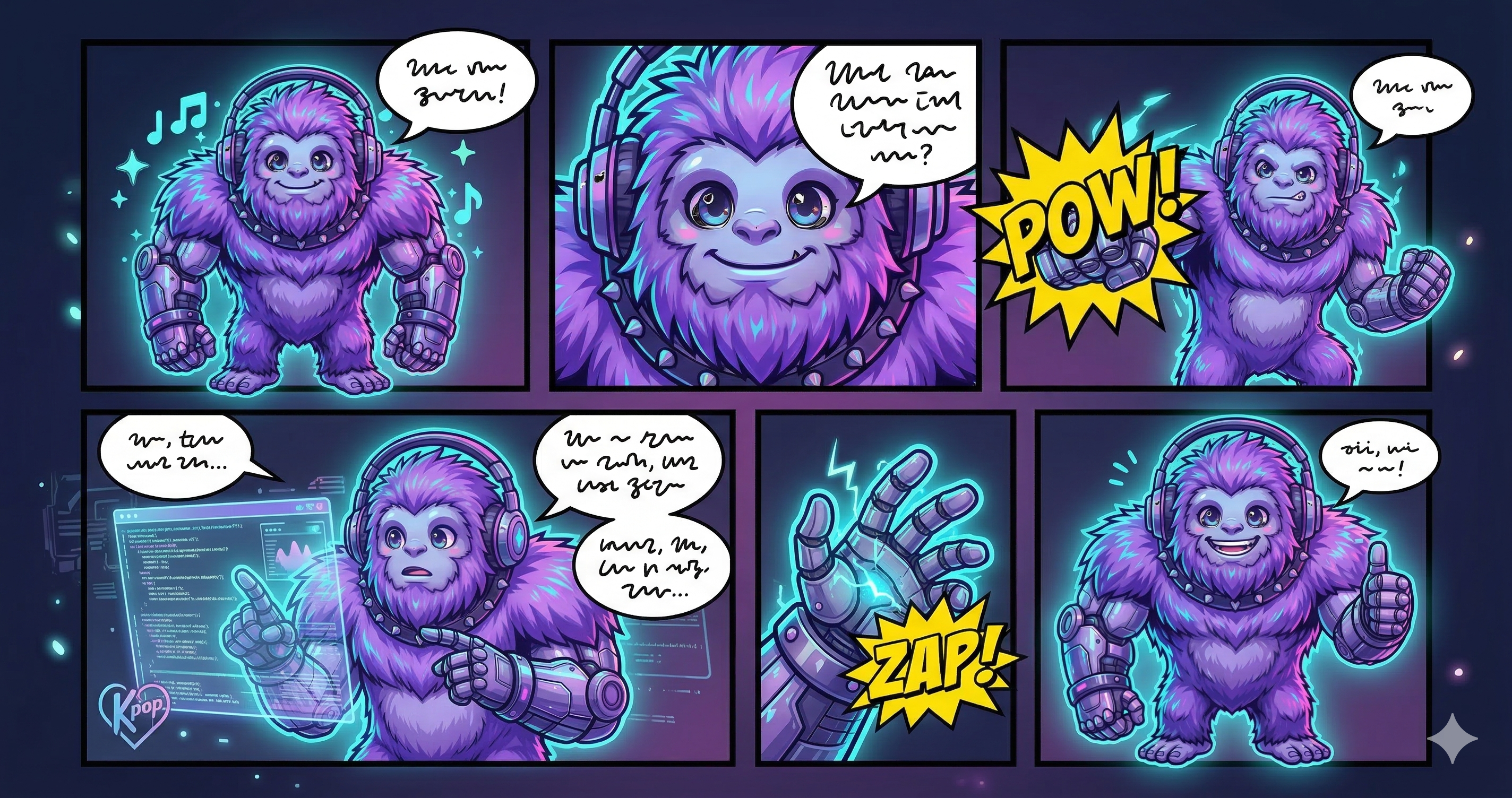
The Spirit Fluency Comic is a free, print-ready decodable comic made for ER, IR, and UR practice. It lines up with UFLI Foundations Lessons 80–82 — right where these three patterns come together.
Here's what you get:
- A 6-panel comic strip starring the Spirit characters, with all dialogue built from decodable ER/IR/UR words
- Target words woven naturally into speech bubbles — "fern," "bird," "surf," "nurse," "her," "stir," "burn," and more
- Comprehension questions at the bottom to connect decoding with meaning
- A clean print layout that fits on one letter-size page — no trimming needed
Every word in the comic is decodable using patterns your students have already learned through Lesson 79. No surprise sight words, no patterns that jump ahead of the sequence.
3 Ways to Use It in Your Classroom
1. Fluency Warm-Up Before Small Group
Print the comic and use it as a 5-minute warm-up before your small group lesson. Students read the panels aloud — chorally or taking turns — before you jump into the main activity. It gets the ER/IR/UR patterns activated in a low-pressure way, and it gives you a quick snapshot of where each reader is.
The comprehension questions at the bottom make a great quick discussion: "What happened in panel 3? Which word told you that?" Five minutes, and you've hit both decoding and comprehension.
2. Partner Reading Station
Put the comic at a literacy center station. Pairs take turns reading panels while their partner follows along, then both answer the comprehension questions on their own before comparing.
This works especially well if you're running guided reading at another table. The comic is self-contained — after one modeled session, students can handle it independently. Just assign a "reader" and a "listener" and have them switch halfway through.
3. Take-Home Reading with a Parent Note
It's one page — just send it home. Add a quick parent note: "Your child is practicing words where ER, IR, and UR all make the same sound. Ask them to read the comic to you and point out the target words." Parents don't need to know phonics. They just need to listen and ask a question or two.
This is especially helpful for students who need more reps than one school day can give them. A 5-minute read-aloud at home adds real practice without piling on homework.
 The Spirit Fluency Comic is completely free.
No email required. Download directly from Teachers Pay Teachers.
 Download the Free Comic on TPT →
Opens in a new tab. Free TPT account required to download.
The Spirit Characters and the Bigger Picture
The Spirit characters in this comic are the same ones your students will find in the Vibe-Verse card game. If they connect with the anime style, the character names, the comic-panel storytelling — that's a great sign.
The card game covers all five r-controlled vowel patterns (AR, OR, ER, IR, UR) across 40+ decodable words. Every turn uses the same Usage Strike mechanic, so every turn is a decoding attempt. It follows the same UFLI scope and sequence, which means the comic and the game fit together — they're not separate activities, they're part of the same practice system.
Start with the comic. If your students are into it, the game gives them a whole lot more to work with.
 Get the Mega Bundle — $39.99 (until July 31)